Pour-Over Brewing: A Beginner's Walkthrough
How to get clean, sweet, repeatable pour-over coffee from a V60 or any cone dripper.
8 min read
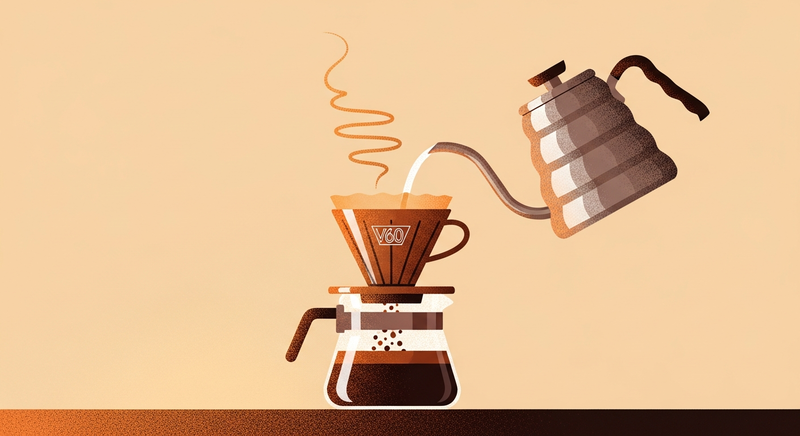
Pour-over is the method that taught a generation of home brewers to taste their coffee. It is hands-on, it is forgiving once you understand it, and it rewards attention with a remarkably clean, sweet cup. All you really need is a cone dripper, a paper filter, freshly ground coffee, hot water, and a scale. A gooseneck kettle helps a great deal but is not strictly required to start.
Start with the right ratio
Pour-over shines around 1:16 to 1:17 — one gram of coffee for every sixteen to seventeen grams of water. A very common single-cup recipe is 18 grams of coffee to about 288 grams of water (that is 1:16), which yields roughly a generous mug after some water is absorbed by the grounds. If you want a lighter, more tea-like cup, nudge toward 1:17; for something with more body, move toward 1:15.
Grind and water
- Grind: medium, similar to coarse table salt. Too fine and the water drains slowly and over-extracts (bitter); too coarse and it rushes through and under-extracts (sour).
- Water temperature: 195–205°F (90–96°C). If you do not have a thermometer, let a boiling kettle rest for about thirty seconds.
- Filter: rinse the paper with hot water before brewing. This removes the papery taste and warms the dripper and cup.
The bloom
Fresh coffee releases carbon dioxide when it first meets hot water, and that gas pushes water away from the grounds. The bloom is a short pre-soak that lets the gas escape so the rest of your pour extracts evenly. Pour just enough water to wet all the grounds — roughly twice the weight of the coffee, so about 36 grams of water for 18 grams of coffee — give the dripper a gentle swirl, and wait thirty to forty-five seconds. You should see the bed puff up and bubble; that is exactly what you want.
The main pour
- After the bloom, pour in slow, steady spirals from the center outward, keeping the water level moderate rather than flooding the cone.
- Aim to add water in two or three even pours, pausing briefly so the level drops a little between them.
- Keep the grounds moving gently with the stream, but avoid pouring directly onto the filter wall, which lets water bypass the coffee.
- Finish all your pours by about the halfway point of your total brew time so the bed has time to drain.
Timing and what good looks like
A single cup should take roughly two and a half to three and a half minutes from the first drop to the last. When it finishes, the spent grounds should sit in a flat, even bed at the bottom of the cone — not piled up one side. A clean flat bed means your pours were even. A lopsided crater usually means the pour was rushed or off-center.
Dialing it in
Taste, then adjust one thing. Sour, thin, or salty? You are likely under-extracting — grind finer or slow your pour. Bitter, dry, or hollow? You are likely over-extracting — grind coarser or pour a touch faster. Resist the urge to change three things at once. Save the recipe that works, and when friends come over and you need four cups instead of one, scale the whole thing in one tap so your hard-won ratio survives the math.
Start pour-over with a V60 dripper
A V60 is an affordable, widely supported way to practice the bloom and controlled pours described in this guide.
Affiliate link: Drip Ratio may earn from qualifying purchases through Amazon or regional marketplace partners, at no extra cost to you.
Related guides
- Pour-Over Dripper Owner's Guide: V60, Chemex, and Friends — Cone, flat-bottom, or carafe-in-one? How to choose a dripper, what else you actually need, and how to care for it all.
- Grind Size: Getting It Right for Every Brewer — The variable that quietly ruins more cups than any other — and how to match it to your brew method.