Grind Size: Getting It Right for Every Brewer
The variable that quietly ruins more cups than any other — and how to match it to your brew method.
7 min read
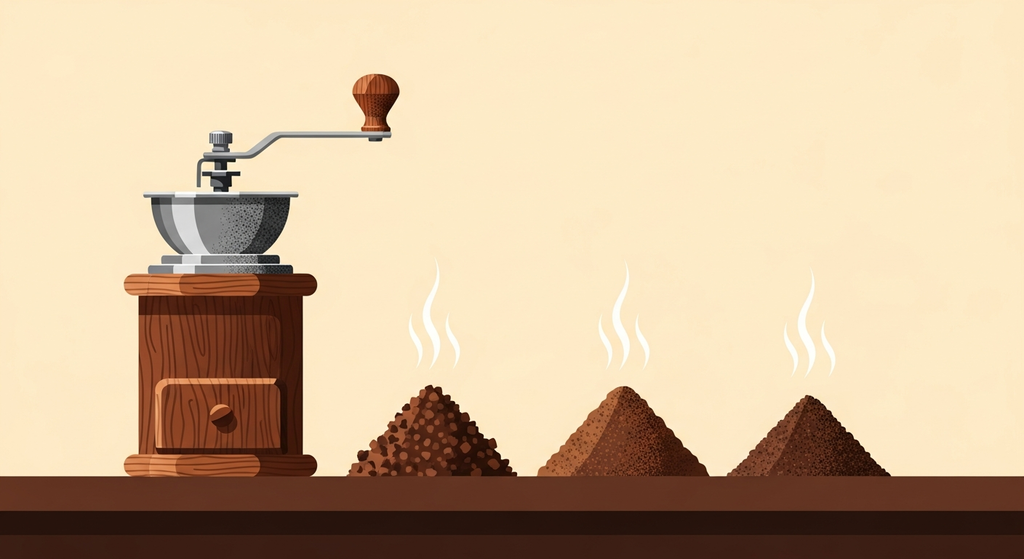
Of all the variables in brewing coffee, grind size is the one that quietly ruins more cups than any other. People obsess over beans and water temperature, then grind everything the same way and wonder why their pour-over is sour and their French press is muddy. The grind is how you control extraction — how fast water can pull flavor out of the coffee — and every brew method wants something different.
Why grind size changes the taste
Water extracts flavor from the surface of coffee grounds. Finer grounds expose far more surface area, so water pulls flavor out faster; coarser grounds expose less, so extraction is slower. Match the grind to how long the water and coffee stay in contact and you get balance. Mismatch them and you get the two classic faults: under-extraction (sour, thin, salty) from a grind that is too coarse for the method, and over-extraction (bitter, harsh, drying) from a grind that is too fine.
A grind-size cheat sheet
- Extra coarse, like peppercorns — cold brew.
- Coarse, like rough sea salt — French press.
- Medium-coarse — Chemex and larger pour-overs.
- Medium, like table salt — V60 and most drip machines.
- Medium-fine — AeroPress and moka pot.
- Fine, like powdered sugar — espresso.
- Extra fine, like flour — Turkish coffee.
Why a burr grinder beats a blade grinder
A blade grinder chops beans unevenly into a mix of boulders and dust, which means part of your coffee over-extracts while the rest under-extracts in the same brew — you literally cannot win. A burr grinder crushes beans between two ridged surfaces set a fixed distance apart, producing uniform particles you can actually dial in. If you upgrade one piece of gear, make it the grinder, not the brewer.
How to dial in your grind
- Pick the starting point for your method from the cheat sheet above.
- Brew a cup and taste it without milk or sugar.
- If it tastes sour, thin, or weak, grind finer and try again.
- If it tastes bitter, dry, or harsh, grind coarser.
- Change only the grind between attempts so you can tell what it did.
Grind fresh, right before brewing
Ground coffee goes stale far faster than whole beans because all that new surface area is exposed to air. Whole beans hold their flavor for weeks; ground coffee starts fading within minutes and is noticeably flat within a day or two. Grinding right before you brew is one of the cheapest, biggest upgrades available to a home brewer.
Buy the best grinder you can afford before you buy a better brewer. An even grind makes a cheap dripper sing; an uneven grind wastes an expensive one.
Explore the general recipe scaler
This guide does not have a matching preset. Open Try to choose a recipe and scale it without signing up.
Get consistent grounds with a burr grinder
A conical burr grinder produces more even particles than a blade grinder and gives you repeatable settings for each brew method.
Shop conical burr coffee grinders
Affiliate link: Drip Ratio may earn from qualifying purchases through Amazon or regional marketplace partners, at no extra cost to you.