How to Steam and Froth Milk at Home
Glossy, sweet, pourable milk is what separates a café latte from a sad homemade one — and it's a learnable skill.
7 min read
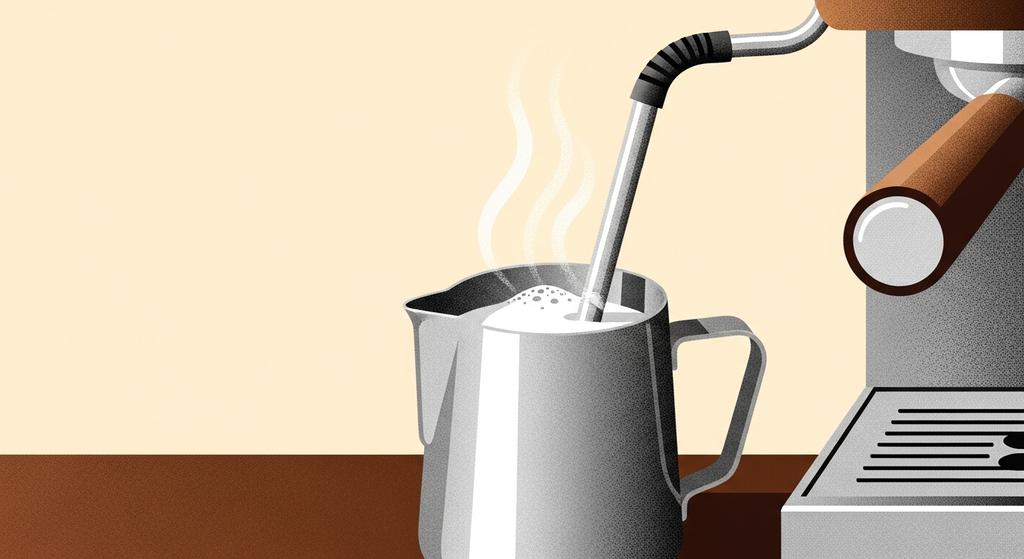
The difference between a café latte and a sad homemade one is almost always the milk. Beautifully steamed milk is sweet, glossy, and pourable, with a texture like wet paint — not a stiff cap of bubbles floating on hot milk. The good news is that good milk texture is a learnable skill, and you can get surprisingly close even without an espresso machine.
Microfoam versus dry foam
There are two textures worth knowing. Microfoam is milk with countless tiny, invisible bubbles folded evenly through it — silky, glossy, and what you want for lattes and flat whites. Dry foam is stiff, large-bubbled, and airy, the kind you spoon onto a traditional cappuccino. The mistake most beginners make is creating dry foam by accident: too much air, too early, and the milk turns to bubbly froth instead of smooth microfoam.
Steaming with a wand
- Start with cold milk in a cold metal pitcher, filled no more than a third full so it has room to expand.
- Purge the steam wand briefly, then submerge the tip just below the surface.
- Open the steam fully. For the first few seconds keep the tip near the surface to introduce a little air — you want a gentle hiss, not loud screeching.
- Submerge the tip slightly deeper to create a smooth whirlpool that folds the foam into the body of the milk.
- Stop when the pitcher is too hot to hold for more than a second or two — about 140–150°F (60–65°C).
- Tap the pitcher on the counter to pop large bubbles, then swirl until the milk looks glossy.
No espresso machine? You still have options
- Handheld milk frother: heat the milk, then whisk with the frother until foamy.
- French press: pour in warm milk, then pump the plunger up and down vigorously for about thirty seconds.
- Jar method: half-fill a jar with milk, screw the lid on, shake hard, then microwave uncapped for thirty seconds to stabilize the foam.
- Whisk: simply heat the milk and whisk briskly by hand for a lighter foam.
Which milk froths best
Whole dairy milk is the most forgiving — its fat and protein create stable, sweet foam. Skim milk froths into bigger, stiffer bubbles that collapse quickly. Among plant milks, 'barista' versions are formulated to steam well; oat barista milk in particular foams beautifully, while plain almond and rice milks can be tricky and may split.
The pour matters too
Even perfect microfoam is wasted if you dump it in. Start pouring from a height to let the espresso and milk mix, then lower the pitcher close to the surface as the cup fills to float the foam on top. That final low, steady pour is where latte art comes from — but a glossy, well-mixed cup tastes great with or without a pretty leaf.
Aim for milk that pours like wet paint and tastes sweet on its own. Get the texture right and even a modest espresso becomes a great milk drink.
Put this example into practice
Open the matching How to Steam and Froth Milk at Home example in Try and scale it without signing up.
Froth milk without a steam wand
A handheld frother is a compact, inexpensive way to add foam when you do not have an espresso machine with a steam wand.
Affiliate link: Drip Ratio may earn from qualifying purchases through Amazon or regional marketplace partners, at no extra cost to you.