The Coffee-to-Water Ratio, Explained
Why the ratio of coffee to water is the single most important number in brewing — and how to choose yours.
7 min read
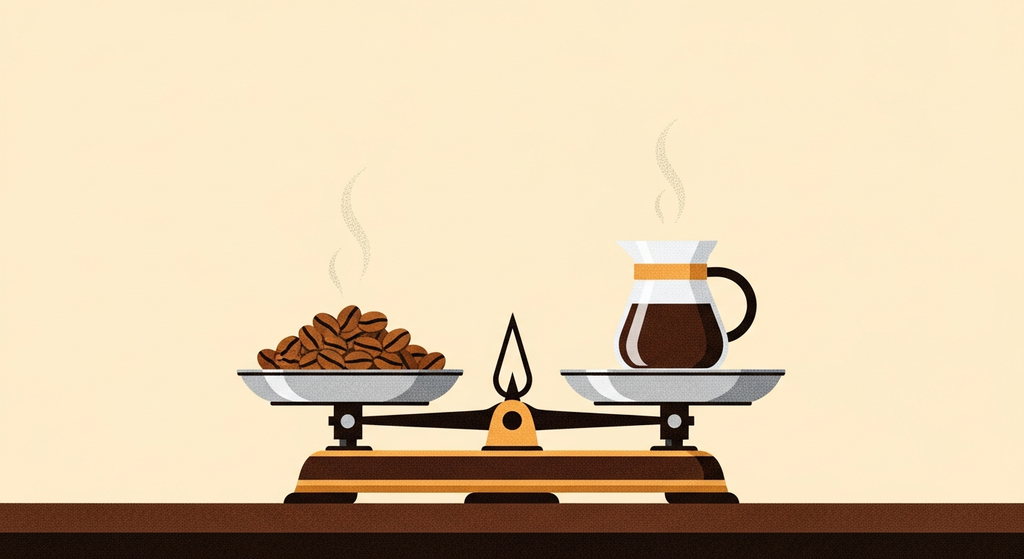
If you only learn one thing about brewing better coffee, make it this: the ratio of coffee to water matters more than almost anything else. Before the grinder, before the water temperature, before the fancy kettle, the ratio decides whether your cup tastes balanced, thin and sour, or heavy and bitter. The good news is that it is just a number, and once you understand it you can repeat a great cup on purpose instead of by luck.
What a ratio like 1:16 actually means
A brewing ratio is written as coffee-to-water by weight. A 1:16 ratio means one gram of ground coffee for every sixteen grams of water. Because one milliliter of water weighs almost exactly one gram, you can think of 1:16 as one gram of coffee per sixteen milliliters of water. So a single 250 ml cup at 1:16 needs about 15.6 grams of coffee. Scale it up and 1,000 ml of water needs roughly 62 grams of coffee.
Notice that the ratio is about weight, not volume. Scoops are unreliable because coffee beans vary wildly in density depending on roast level and grind size — a level scoop of light-roast beans can weigh noticeably more than the same scoop of oily dark roast. This is exactly why a small kitchen scale will improve your coffee more than almost any gadget you can buy.
A practical starting range
Most filter coffee lives between 1:15 and 1:17. That range is your home base. Within it, a lower number (say 1:15) gives a stronger, more concentrated cup, while a higher number (1:17) gives a lighter, more delicate one. The Specialty Coffee Association's commonly cited 'golden cup' guidance lands right in the middle of this window, which is a good reason to start there and adjust from your own palate rather than someone else's.
- 1:15 — bold and full-bodied, good for darker roasts and bigger mugs.
- 1:16 — the reliable all-rounder; start here if you are unsure.
- 1:17 — bright and tea-like, flattering for delicate light roasts.
Strength versus extraction
It helps to separate two ideas that beginners often blur together. Strength is how concentrated the cup is — how much dissolved coffee is in the water — and the ratio controls it directly. Extraction is how much flavor you have pulled out of the grounds, and it is controlled mostly by grind size, time, and temperature. You can have a strong cup that is under-extracted and sour, or a weak cup that is over-extracted and bitter. The ratio sets the strength; your technique sets the extraction. Get the ratio steady first, then chase extraction by adjusting your grind.
How to adjust to taste
- Brew a cup at 1:16 and taste it honestly without adding milk or sugar.
- If it tastes thin, watery, or sharply sour, try more coffee — move toward 1:15.
- If it tastes heavy, muddy, or harshly bitter, try less coffee — move toward 1:17, and consider a coarser grind.
- Change one variable at a time so you can tell what actually made the difference.
The ratio is the part of brewing you should make boringly consistent. Once it never changes by accident, every other adjustment finally tells you something.
Why writing the ratio down changes everything
Here is the trap most home brewers fall into: they find a cup they love, then can never repeat it because they did not record what they did. They eyeball the coffee one morning, get distracted the next, and slowly drift back to mediocre. The fix is almost embarrassingly simple — record the coffee weight, the water weight, and therefore the ratio, every single time. That is precisely what Drip Ratio is built to do: you store the recipe once, and when you want two cups instead of one, every ingredient scales automatically so the ratio stays locked in.
Master the ratio and you have the foundation for everything else. The method-specific guides below build on it — pour-over, French press, AeroPress, espresso, and cold brew each have their own ideal range, but they all start from this same simple number.
Measure your ratio with a digital coffee scale
A scale makes coffee and water measurements repeatable, so you can adjust strength deliberately instead of relying on inconsistent scoops.
Affiliate link: Drip Ratio may earn from qualifying purchases through Amazon or regional marketplace partners, at no extra cost to you.
Related guides
- Commercial Batch Brewer Owner's Guide: Fast, Consistent Volume — Size a commercial batch brewer around peak demand, protect quality in the holding window, and understand the labor and margin behind every urn.